



I don’t care

From $39.00
All my work is done using the technique called collage (from the French coller), which translates “to paste,” which is an artistic technique that consists of the construction of plastic works through the agglomeration or conjunction of pieces or cutouts from different origins, “trying” to give a unified tone format. In other words, it is about assembling work with bits obtained from other sources such as photographs, illustrations, Artcraft, images in magazines, and everyday objects.
On a personal level, my artistic style is deeply rooted in Kitsch, a style known for its vibrant colors, bold shapes, and striking elements. I often incorporate illustrations from the public domain into my work. My fascination with antiquities and furniture is a recurring theme, evident in the costumes of my characters and the environments where my works’ narratives unfold.
My image sources can include images and cuttings from very old magazines that are passed through a scanner to be processed into digital format. Therefore, it is very possible that the final prints do not have uniform images and can have different textures.
Creations by Erika C. Brothers are printed on Velvet Fine Art paper, which is heavyweight, cotton fiber, and acid-free. The prints use high-quality inks and cotton paper for a realistic look and feel like original photography oil paintings.
The definition of a giclee is a beautiful, long-lasting technology for fine art or photograph reproduction. It uses a high-quality inkjet printer to make individual copies of different sizes and materials.
For more information on the creativity process of this print, see section of Description, below.
*The prints can take up to 8 to 10 business days to print and ship.
*All prices include shipping costs.
*If your country or region does not fall within the current drop-down list of countries or regions, or if you are in need of additional print sizes not listed. Please contact us for options at sales@kikasworkshop.com or by using the contact form on the main page.
*Depending on the Art print selected, another size may be required due to design and pixels; we would advise if a size change is required. Additionally, color variations from computer to print may vary due to the textures of our Premium Fine Art Cotton Paper.
Please read my Terms of Service. We do not accept returns.
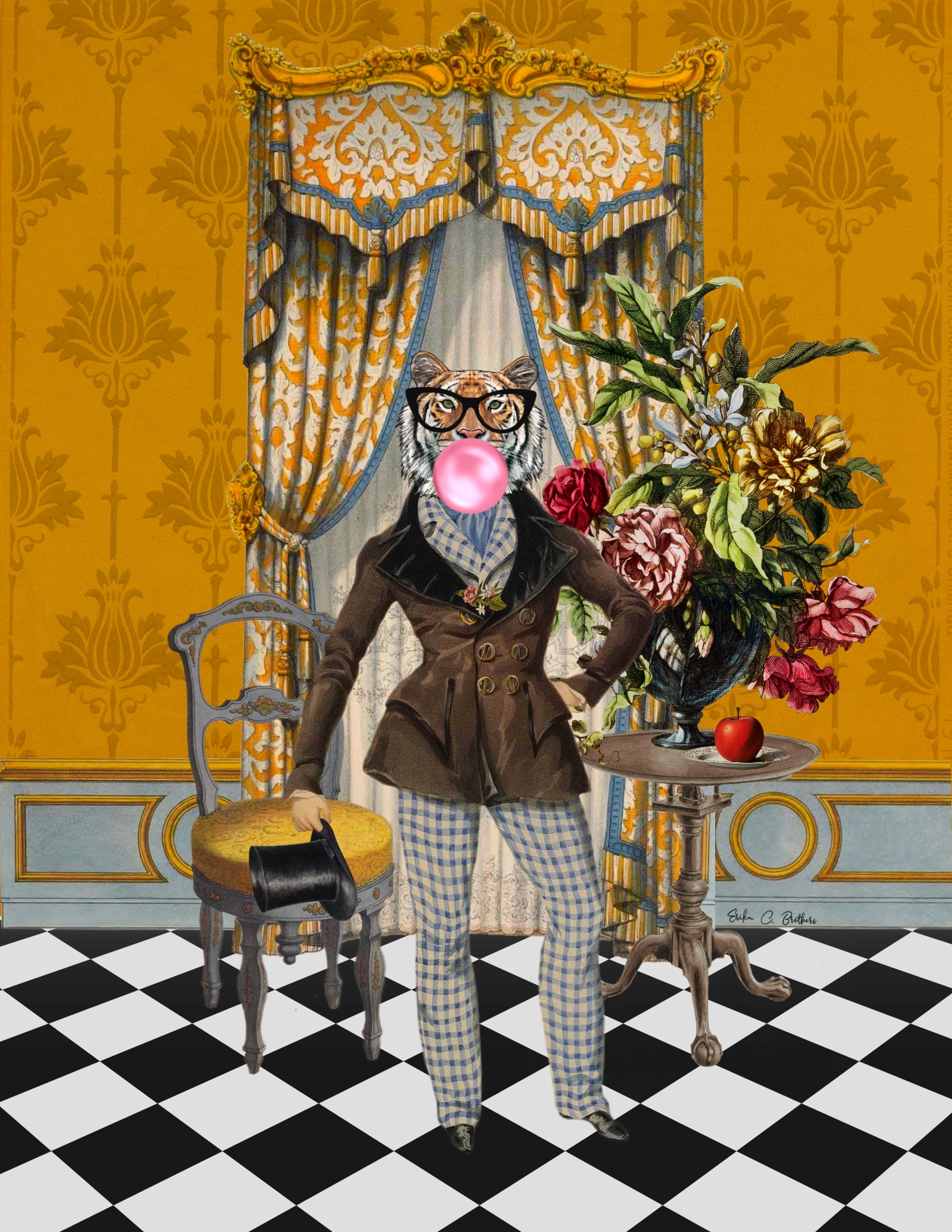
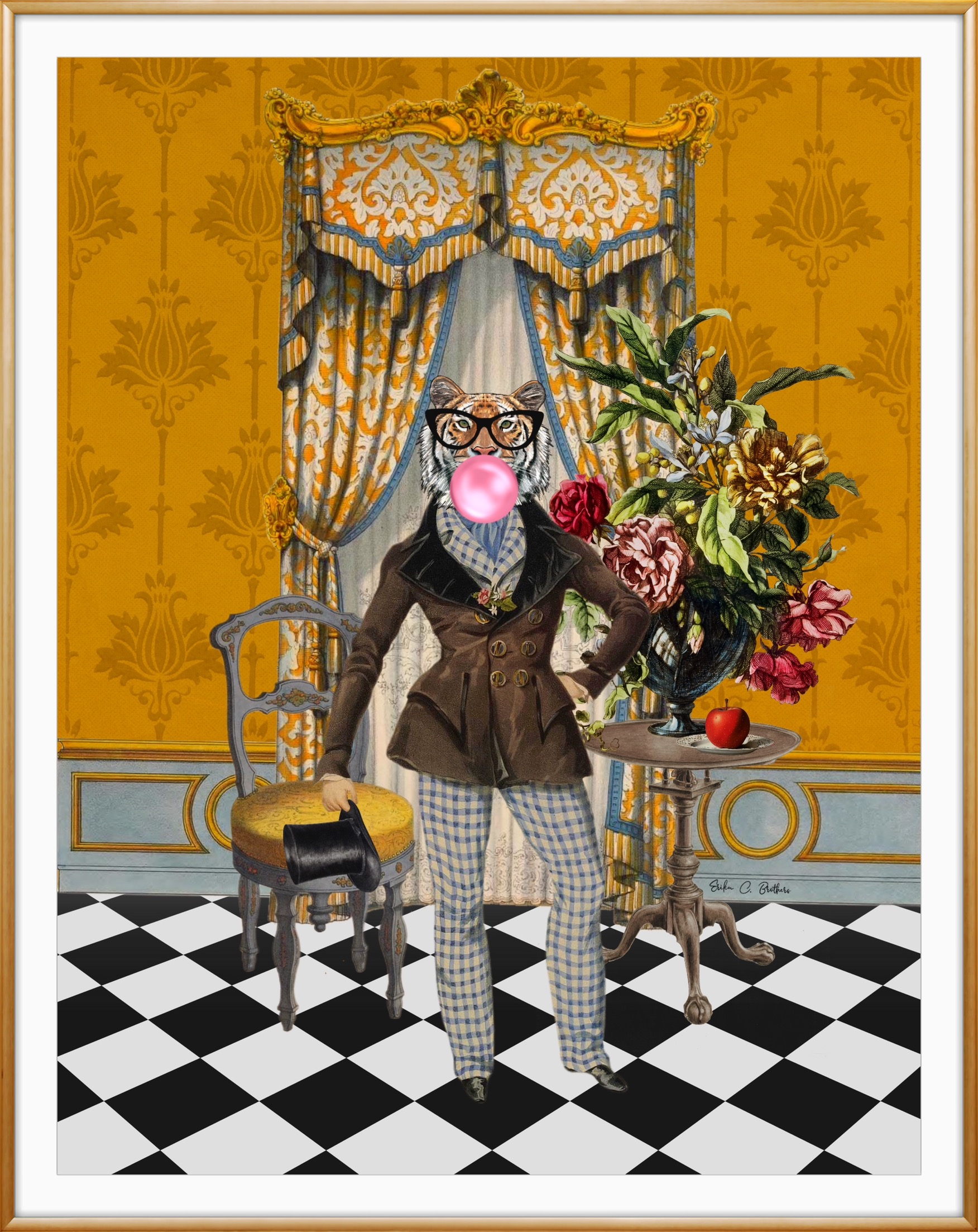
A whimsical scene unfolds in “I don’t care” where anthropomorphism meets aristocratic flair. At the center stands a strikingly stylish tiger figure, upright like a human and dressed to impress. The tiger wears a fitted brown double-breasted blazer, cinched at the waist with gold buttons, over a crisp checkered shirt. Blue and white plaid pants add a playful contrast, lending an almost modern twist to its classic attire. The tiger’s face is animated with a sense of character—eyes framed by thick black-rimmed glasses and a perfectly round pink bubble of chewing gum floating from its mouth, playfully breaking the otherwise regal composure.
The background of “I don’t care” is a decadent golden mustard wallpaper adorned with classical damask motifs that echo the opulence of European palaces. This sense of grandeur is further emphasized by the elaborate drapery: blue-trimmed curtains with baroque folds and golden tassels frame a central window, hinting at the world beyond. Every fabric, fold, and decorative flourish is meticulously rendered, immersing the viewer in an atmosphere of surreal luxury.
To the left of the tiger, a Louis-style chair with a golden-yellow cushioned seat adds to the antique charm. The tiger’s right paw rests confidently on its hip, while the left paw holds a black top hat with relaxed flair, suggesting a self-assured and slightly rebellious personality. This character feels both aristocratic and subversive—a nod to tradition with a twist of contemporary cool.
To the right, a round wooden pedestal table bears a lush arrangement of oversized flowers—peonies, roses, lilies—blooming in an impossible bouquet of bold reds, pinks, and creamy whites. Nestled among the flowers is a shiny red apple, adding a symbolic layer—perhaps a reference to temptation, knowledge, or innocence. The lushness of the bouquet seems to spill over the edge of the table, some petals almost in motion, bringing life to the composition.
The entire scene of “I don’t care” is grounded by a black-and-white checkered floor, the classic pattern lending a theatrical stage-like quality to the tableau. The contrast of light and shadow on the tiles enhances the depth of the scene, drawing the eye upward through the various layers of texture and detail.
Everything in this image has been carefully curated: the Victorian aesthetic, the surreal animal portraiture, the bold mix of patterns, and the humorous twist of modern accessories like the bubble gum and glasses. The tiger stands as both an icon of strength and a fashion statement, blurring the line between animal instinct and human vanity.
There’s an intentional playfulness here, one that challenges traditional portraiture and invites the viewer into a world where the extraordinary is the norm. The blending of natural and artificial, wild and civilized, past and present, creates a dynamic visual narrative. It suggests a celebration of individuality, wit, and elegance, all seen through the lens of fantasy and refined eccentricity.
Would you like to see Erika’s Instagram? Click here
Would you like to see Erika’s YouTube Channel? Click here
Interested in other art products? Click here
| Shipping Regions | Mexico, USA, Canada, Europe & Australasia |
|---|---|
| Portrait Size | 25×20 cm, 28×36 cm, 30×24 cm, 40×32 cm, 40×55 cm, 50×40 cm, 60×48 cm, 70×56 cm, 80×64 cm, 90×72 cm, 100×80 cm, 120×96 cm, 8×10 inches (20×25 cm), 9×12 inches (23 x30cm), 11×14 inches (28x36cm), 18×24 inches (46x60cm), 16×20 inches (50×40 cm), 20×24 inches (40x60cm), 20×40 inches (40x100cm), 24×30 inches (60x76cm), 24×36 inches (60x91cm), 30×45 inches (76x114cm), 20×25 cm (8x10in), 28×36 cm (11x14in), 30×40 cm (12x16in), 40×50 cm (16x20in), 48×60 cm (20x24in), 60×80 cm (24x32in), 70×100 cm (27.55×39.36in), 100×152 cm (40x60in) |
| Shipping Regions | Mexico, USA, Canada, Europe & Australasia |
|---|---|
| Portrait Size | 25x20 cm, 28x36 cm, 30x24 cm, 40x32 cm, 40x55 cm, 50x40 cm, 60x48 cm, 70x56 cm, 80x64 cm, 90x72 cm, 100x80 cm, 120x96 cm, 8x10 inches (20x25 cm), 9x12 inches (23 x30cm), 11x14 inches (28x36cm), 18x24 inches (46x60cm), 16x20 inches (50x40 cm), 20x24 inches (40x60cm), 20x40 inches (40x100cm), 24x30 inches (60x76cm), 24x36 inches (60x91cm), 30x45 inches (76x114cm), 20x25 cm (8x10in), 28x36 cm (11x14in), 30x40 cm (12x16in), 40x50 cm (16x20in), 48x60 cm (20x24in), 60x80 cm (24x32in), 70x100 cm (27.55x39.36in), 100x152 cm (40x60in) |
Related products

ARTPRINTS
ARTPRINTS

ARTPRINTS
ARTPRINTS

ARTPRINTS